What Is the PDK Gearbox?
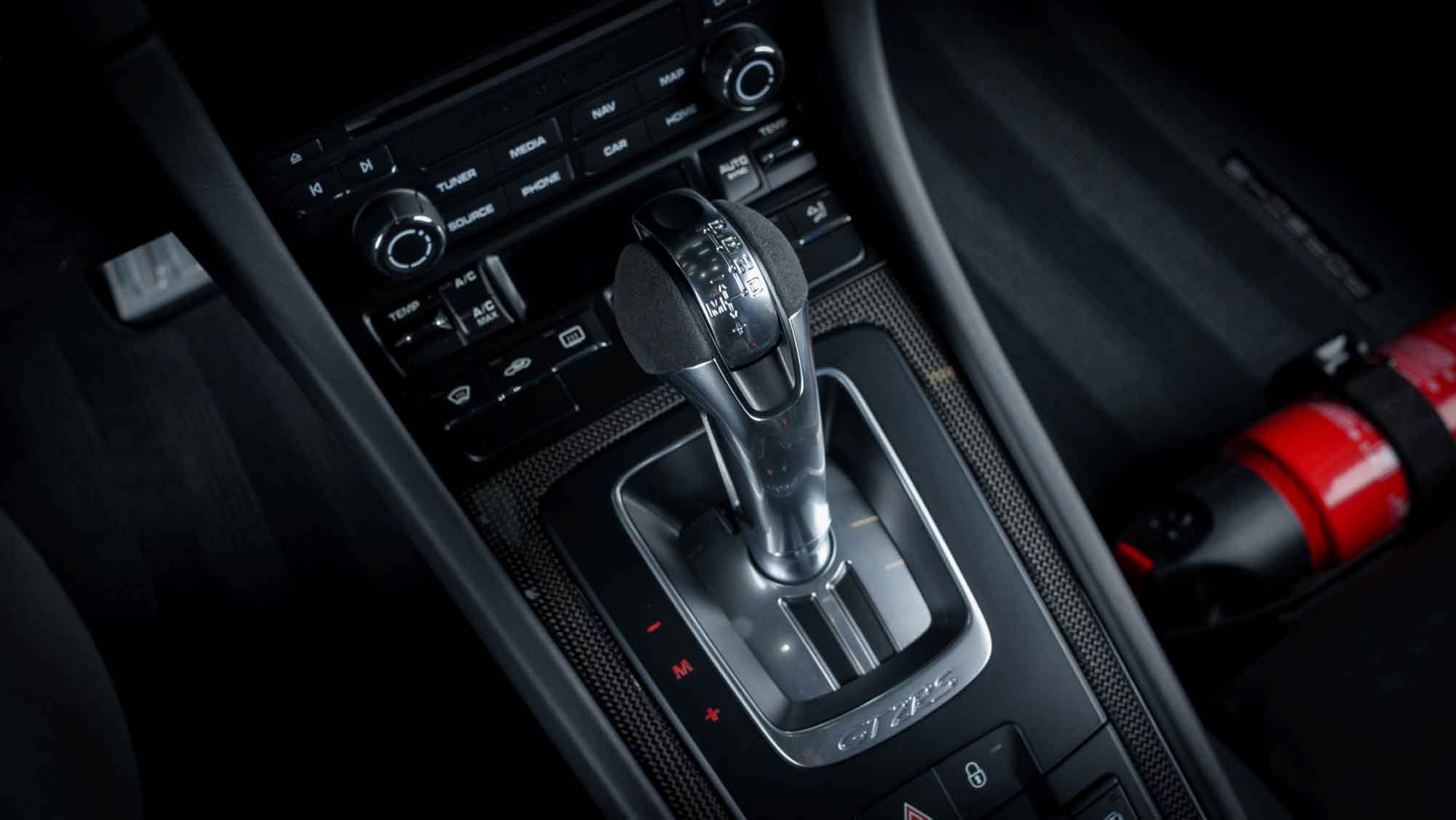
The PDK — Porsche Doppelkupplung — is a dual-clutch transmission first introduced on the 997 generation in 2008. Since then it has become the standard gearbox choice across the 911, Cayman, Boxster, Macan, Cayenne, and Panamera ranges.
Unlike a traditional torque-converter automatic, the PDK uses two separate clutch packs — one handling odd gears, one handling even — allowing the next gear to be pre-selected before the shift happens. The result is exceptionally fast, smooth gear changes without a break in drive.
It is an engineering achievement. But it is also a precision mechanical unit that requires proper maintenance, and this is something many owners discover only when problems emerge.
The “Lifetime Fluid” Myth
Porsche historically described PDK fluid as “lifetime fill” — meaning no scheduled change was required. This is one of the most misleading pieces of guidance in modern Porsche ownership.
“Lifetime” in this context means the lifetime of the fluid under ideal conditions — not the lifetime of the gearbox, and not the lifetime of the car. Fluid degrades over time and mileage. Heat cycles break down the oil’s protective qualities. Clutch material and fine metal particles accumulate in the fluid. Once degraded, that fluid is no longer protecting the gearbox the way it should.
Most Porsche specialists — including ourselves — recommend PDK fluid changes at around 40,000 to 60,000 miles, or every four to five years in lower-mileage cars. Some high-use vehicles, or those used on track, should be done more frequently.
This is not about upselling a service. It is about protecting a gearbox that costs several thousand pounds to replace.
What Does a PDK Service Actually Involve?
The PDK has two separate fluid circuits: the gearbox oil and the mechatronic unit fluid. Both need to be serviced, and they require different fluids.
Gearbox Oil
The gearbox oil lubricates the gears, bearings, and clutch packs. Over time this becomes contaminated with fine metallic particles and the detergent additives break down. Changing this oil restores lubrication and protects the internal components.
Mechatronic Fluid
The mechatronic unit is the PDK’s control brain — a hydraulic and electronic module that manages gear selection and clutch engagement. It has its own fluid circuit, and this fluid is separate from the main gearbox oil. Neglecting it is a common oversight.
A proper PDK service means draining and refilling both circuits with the correct Porsche-approved fluids, not a generic transmission fluid. The wrong fluid can cause incorrect clutch behaviour, shuddering, or long-term damage.
Symptoms of a Neglected PDK
If a PDK has not been serviced within a reasonable interval, you may notice:
- Hesitation or jerkiness when pulling away from rest, particularly in traffic
- Shuddering during low-speed gear changes — often most noticeable in Sport or Sport Plus mode
- A clunk or thud when engaging Drive or Reverse after the car has been stationary
- Slower or less decisive gear shifts than the car previously offered
- Warning messages on the PCM relating to gearbox temperature or performance
These symptoms do not always mean a major fault. In many cases a fluid change resolves them entirely — particularly the low-speed shudder, which is often caused by clutch-pack contamination in degraded fluid. However, if left too long, wear can become permanent.
PDK Maintenance and Service History
If you are buying a used Porsche with a PDK, checking the service history for evidence of a gearbox fluid change is important. Many PDK-equipped cars reach 60,000 or 80,000 miles without one — especially if the owner has been told by the dealer it is a lifetime fill.
We often encounter cars in that mileage range where the PDK is starting to show the effects of neglected fluid. In most cases, servicing it properly at this point still makes a significant difference. But the earlier it is done, the better.
When reviewing a service history, do not just look for annual services — check specifically whether any mention is made of gearbox or mechatronic fluid. Their absence is worth noting.
PDK Adaptations and Recalibration
After a PDK fluid change, the gearbox may need time to adapt — or in some cases, a formal recalibration via Porsche PIWIS diagnostic equipment. This is because the clutch engagement points and shift parameters are learned over time. With fresh fluid, the gearbox behaviour can initially feel slightly different before it settles.
A Porsche specialist with PIWIS access can carry out a PDK adaptation reset as part of the service, which allows the gearbox to relearn its parameters correctly with the new fluid. This step is often skipped at non-specialist garages and can lead to an unnecessarily rough drive in the days following a service.
Track Use and PDK Maintenance
Owners who use their Porsche on track should be aware that PDK fluid degrades considerably faster under sustained high-load conditions. Repeated hard acceleration, heavy braking, and the heat generated during a track day all accelerate fluid breakdown.
If your car sees even occasional track use, we would recommend shortening your PDK service interval accordingly — in the region of every 20,000 to 25,000 miles, or annually if you are doing multiple events per year.
Closing Thoughts
The PDK is one of the finest dual-clutch gearboxes available in any production car. It is also a precision unit that rewards proper care. The good news is that maintaining it well is straightforward and the cost of a fluid service is modest compared to the cost of gearbox repairs or replacement.
If you are unsure when your PDK was last serviced — or if you are considering buying a Porsche and want the gearbox properly inspected — we are happy to help. We carry out PDK services across all Porsche models and can advise on what is appropriate for your car’s age, mileage, and usage.