
Common Problems with the Porsche 997.1 (2005-2008)

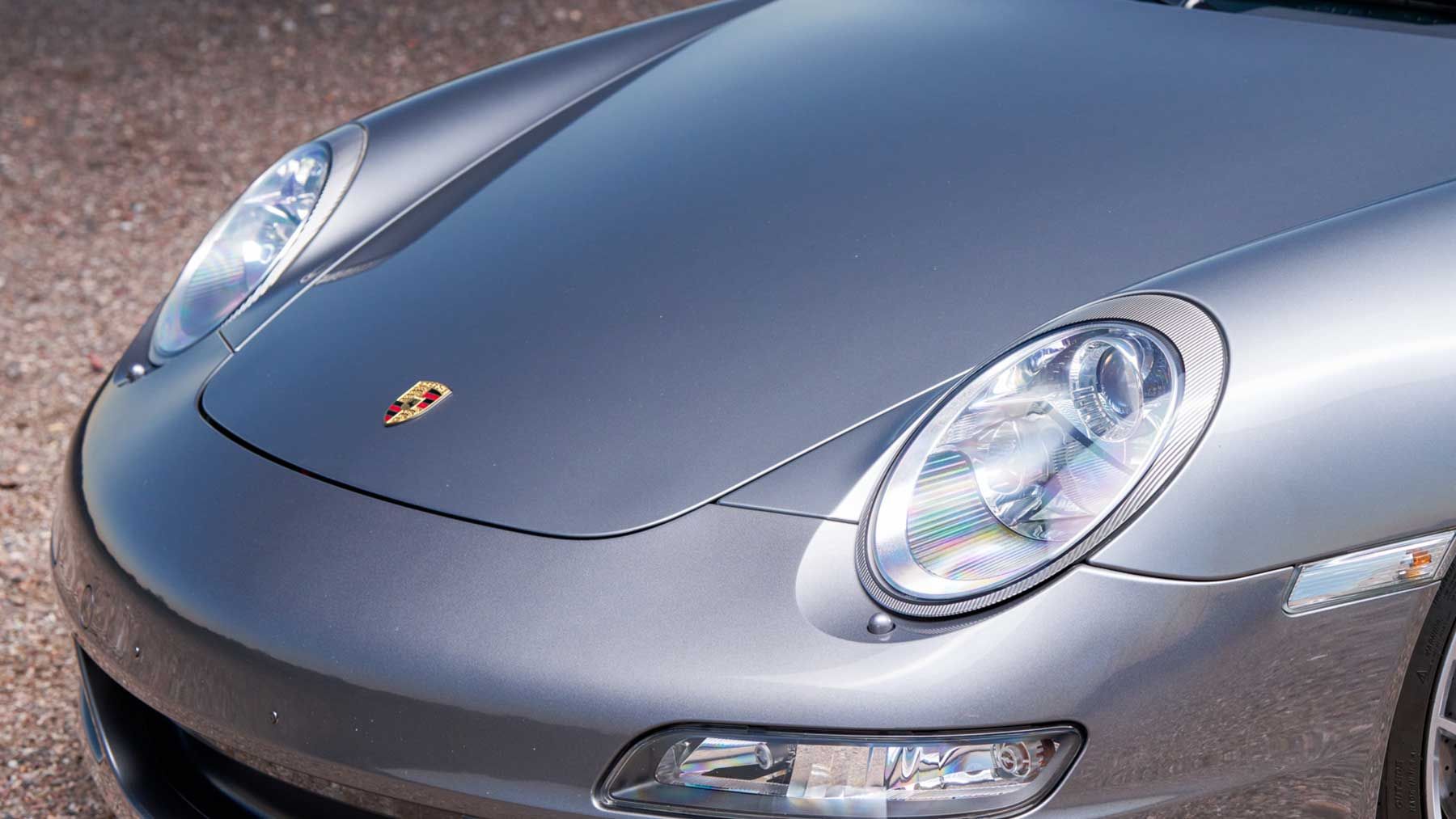
The most common problems on the Porsche 997.1 Carrera are bore scoring, wear in the intermediate shaft (IMS) bearing, oil leaks from the rear main seal, air-oil separator failure, cooling faults, cracked ignition coils and general suspension wear. None should put you off a good car, but they are reasons to buy carefully and maintain it properly.
In short: The Porsche 997.1 is the 911 Carrera range built from 2004 to 2008, with 3.6 and 3.8 litre M96/M97-family engines that can suffer bore scoring and IMS bearing wear. Other common faults are oil leaks, air-oil separator failure, clogged radiators, water pump wear and suspension wear. Most are manageable when they are caught early.
Which 997.1 models does this cover?
This guide covers the 997.1 Carrera range: Carrera, Carrera S, Carrera 4, Carrera 4S, Targa 4 and Targa 4S, in coupé and Cabriolet form. The Carrera models use a 3.6 litre flat-six and the S models a 3.8, both from the M96/M97 engine family also used in the 996.
The first-generation 997 Turbo and the 997 GT2 and GT3 use the Mezger engine, a separate design with its own checks, such as the bonded coolant pipes covered in our article on coolant pipe pinning.
What are the most common Porsche 997.1 problems?
These are the faults that come up most often, each covered in more detail below.
| Problem | Typical signs | Usual fix |
|---|---|---|
| Bore scoring | Ticking from one bank, rising oil consumption, sooty tailpipes on one side | Endoscope inspection; engine rebuild if confirmed |
| IMS bearing wear | Often few warning signs; metal in the oil filter | Monitoring; bearing replacement where the design allows |
| Rear main seal leak | Oil where the engine meets the gearbox | New seal, usually with other gearbox work |
| Air-oil separator failure | Smoke on start-up, rough idle, warning light | New air-oil separator |
| Cooling faults | Coolant leaks, corroded radiators, rising temperature | Clean or replace radiators; new water pump |
| Ignition coils | Misfire, engine management light | Replace the faulty coil |
| Suspension wear | Knocks, vague steering, uneven tyre wear | Replace worn links, bushes, springs or dampers |
What is bore scoring, and how does it affect the 997.1?
Bore scoring is wear to the cylinder walls, where the piston scuffs the bore and leaves vertical score marks. It’s associated with the M96 and M97 engines, so it applies to both the 3.6 and the 3.8 litre 997.1.
The usual explanation centres on the design of the cylinder bores and pistons, combined with high temperatures and a lot of cold, short journeys. Early signs include a light ticking or tapping, often from one bank of cylinders, rising oil consumption and sooty deposits in the tailpipes on one side.
A specialist confirms it with an endoscope (borescope) inspection through the spark plug holes, which shows the cylinder walls without taking the engine apart. If scoring is found, the fix is an engine rebuild, which normally means re-lining the cylinders and fitting new pistons. Our guide to bore scoring covers the causes and options, and our engine and gearbox rebuilds page explains how we approach the work.
Does the 997.1 have IMS bearing problems?
Yes, the 997.1 has an intermediate shaft (IMS) bearing, like every M96 and M97 engine, although failures are less common than on the earlier engines. The intermediate shaft drives the camshafts through the timing chains, so if its bearing fails the engine can be badly damaged.
Most 997.1s, particularly those built from 2006, have the later, larger bearing. It can’t be replaced through the gearbox opening without major engine work. The sensible approach is to keep oil changes on schedule and watch for warning signs, such as metal in the oil filter or a new noise from the back of the engine. Our article on when to replace the IMS bearing covers this in more detail.
Why do 997.1 engines leak oil from the rear main seal?
The rear main seal (RMS) sits where the crankshaft leaves the engine to meet the gearbox, and on M96 and M97 engines it has a reputation for weeping. A light film of oil where the engine and gearbox join is common and rarely urgent.
Because the gearbox has to come off to replace it, the seal is usually renewed during a clutch change or other gearbox work. Any leak in this area is worth diagnosing properly, as oil from elsewhere can run down to the same spot. A seal that is dripping onto the floor should be looked at sooner.
What are the signs of air-oil separator failure?
The most obvious sign of a failed air-oil separator (AOS) is a large cloud of smoke from the exhaust when the engine starts. Others include a rough or hunting idle, an engine management light and an oil filler cap that is hard to remove because of excess vacuum in the crankcase.
The AOS filters oil mist out of the crankcase gases; when it fails, oil is drawn into the intake and burned. Replacing it is a routine repair, covered on our Porsche maintenance and repairs page. Since smoke on start-up can also point to bore scoring, it makes sense to rule that out at the same time.
What cooling problems does the 997.1 have?
The two most common cooling issues on the 997.1 are radiators clogged with debris and water pump wear.
The radiators sit in the front corners of the car behind the bumper openings, with the air-conditioning condensers alongside. Leaves and road grit collect around them, hold moisture and slowly corrode the fins, which reduces cooling and can eventually cause leaks. Cleaning them properly means taking the front bumper off, and it is worth doing as routine maintenance.
The water pump is a wear item on these engines. A coolant weep from the pump, a whine or grinding from the belt area, or a temperature gauge sitting higher than usual are all signs it needs attention. A specialist will often suggest replacing it as preventative maintenance.
Which other parts wear on a 997.1?
Away from the engine, these are the main wear items on a sports car that is now well over 15 years old.
Ignition coils
Ignition coils on these engines can crack with heat and age, causing a misfire and an engine management light. A diagnostic check shows which cylinder is affected, and replacing the coil usually cures it.
Suspension and steering
Drop links, bushes, top mounts and dampers all wear, and coil springs can break. Knocks over bumps, vague or wandering steering and uneven tyre wear are the usual signs. Many 997s have PASM adaptive dampers, which should be checked for faults and leaks.
Clutch and dual-mass flywheel
Manual 997.1s use a dual-mass flywheel, which wears along with the clutch. A rattle at idle, judder when pulling away or a clutch that bites very high are signs that both are due.
What should you check before buying a 997.1?
Before buying a 997.1, check the service history, the engine’s condition and the over-rev record, then have the car inspected by a specialist. In more detail:
- Service history: regular servicing to Porsche’s schedule, with invoices that show what was done, not just stamps.
- Engine condition: a cold start with no smoke or unusual ticking, sensible oil consumption and even tailpipe deposits. An endoscope inspection settles any doubt about bore scoring.
- Over-revs: a PIWIS read-out shows whether the engine has been over-revved, which matters most on manual cars. Our guide to Porsche over-revs explains what the read-out tells you.
- Previous work: invoices for radiator, water pump, rear main seal or suspension work are a good sign, not a warning.
A Porsche pre-purchase inspection covers every aspect of the car, and the car comes to our workshop in High Wycombe for it. If you’re also considering a later car, our comparison of the 997.1 and 997.2 sets out what changed.
Common questions
Is the Porsche 997.1 a reliable car?
A well-maintained Porsche 997.1 can be used regularly and enjoyed without drama. Its known engine weaknesses, chiefly bore scoring and to a lesser degree the IMS bearing, are serious when they occur, which is why service history and a specialist inspection matter more than mileage alone.
How do I know if a 997.1 has bore scoring?
The only reliable way is an endoscope inspection of the cylinder walls through the spark plug holes. Ticking from one bank, rising oil consumption and sooty tailpipes on one side are warning signs, but they need confirming before anyone recommends a rebuild.
Do the 997 Turbo and GT3 have the same problems?
No. The first-generation 997 Turbo and the 997 GT2 and GT3 use the Mezger engine, a different design that isn’t associated with IMS bearing failure or bore scoring. They have their own maintenance points, so they need checking by someone who knows them.
Did the 997.2 solve these engine problems?
The 997.2, built from late 2008, introduced the 9A1 engine, which has no intermediate shaft and so no IMS bearing. Bore scoring is also much less common on the 9A1. The other items on this list, such as cooling and suspension wear, apply to both generations.
Getting your 997.1 checked
The most useful thing a 997.1 owner or buyer can do is have the car looked at by someone who knows these engines. Lawrence has spent over 40 years with Porsche, and we use PIWIS 4 diagnostics to read what the car has recorded. We offer pre-purchase inspections and specialist servicing at our workshop in High Wycombe, with collection and delivery for London clients. Call 01494 534834 or see our contact details.
More on this model: Porsche 911.