
996 Suspension Refresh: Bring Your Porsche Back to Life

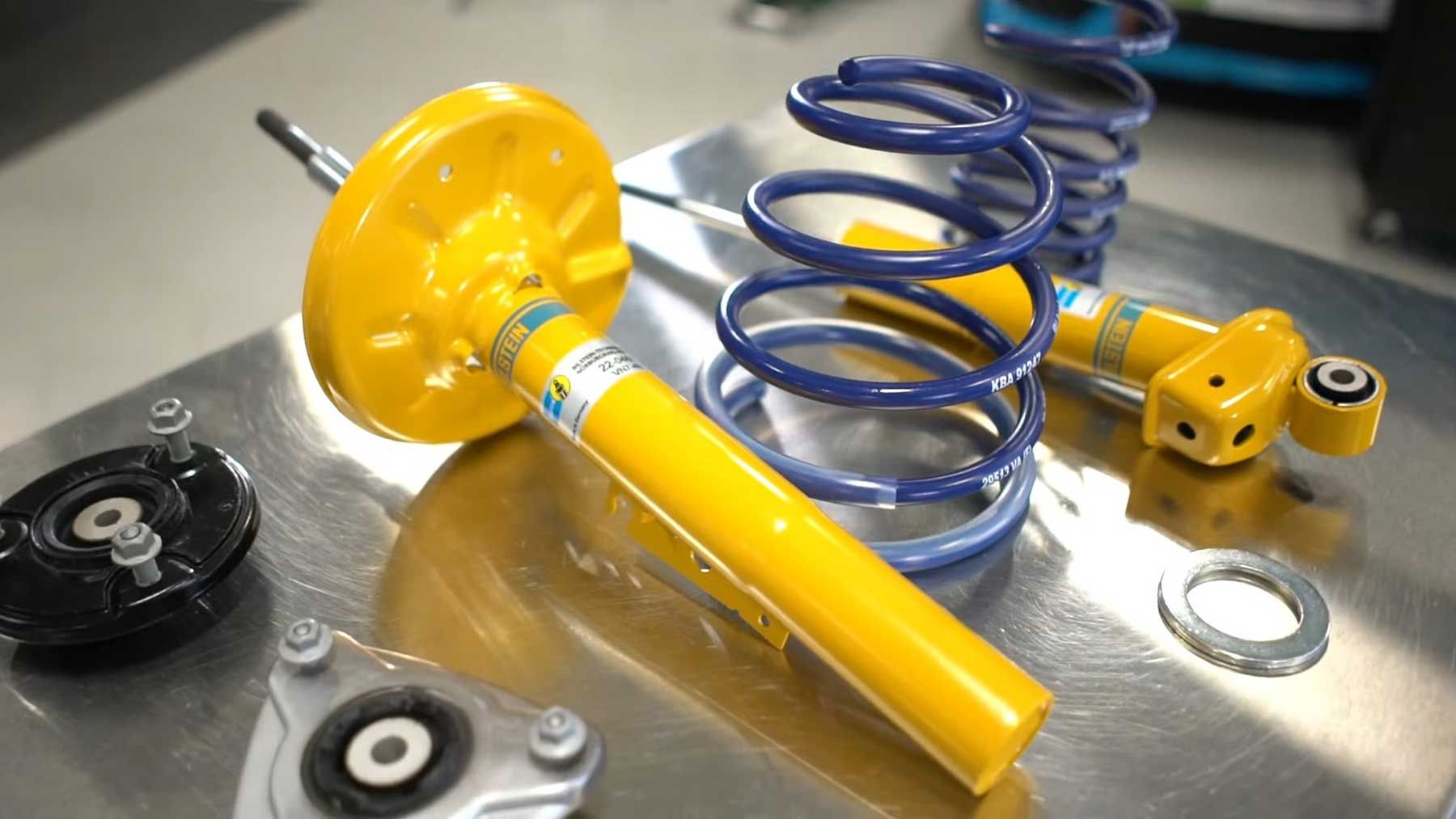
A 996 suspension refresh replaces the worn parts of a Porsche 996’s suspension in one planned job, then sets the wheel alignment properly so the car drives as it should. Even the youngest 996s are now around 20 years old, and tired dampers, mounts, links and bushes are a common reason one feels vague and unsettled.
In short: A Porsche 996 suspension refresh means replacing worn dampers, top mounts, drop links, bushes and ball joints together, rather than one at a time, and finishing with a full geometry set-up. Because these parts wear gradually, owners often don’t notice how far their 996 has drifted from how it should feel. A refresh restores steering precision, ride quality and even tyre wear.
How does the Porsche 996’s suspension work?
The 996, the first water-cooled 911, uses MacPherson struts at the front and a multi-link rear axle developed from the one Porsche introduced on the 993. The 996 was the current 911 from 1997 until the 997 replaced it in 2004, with the Turbo, GT2 and GT3 versions continuing a little longer.
Each arm and link in that system is located by rubber bushes or ball joints, and each wheel is controlled by a damper and a spring. Those are the parts that age. Rubber hardens and cracks, ball joints develop play and dampers gradually lose their control, so a 996 still on its original suspension is very unlikely to drive as it did when new.
What are the signs a 996 needs a suspension refresh?
The usual signs are knocks over bumps, vague or wandering steering, a bouncy or crashy ride and uneven tyre wear. Look out for:
- Knocks or clunks from the front or rear over potholes, speed humps or broken surfaces
- Steering that feels vague, or a car that follows ruts and cambers more than it should
- The body floating or bouncing after a bump instead of settling
- More nose-dive under braking, or more body roll, than you’d expect
- Uneven wear on the inner or outer edges of the tyres
- An off-centre steering wheel, or the car pulling to one side
- Oil on a damper body, which usually means the damper is leaking
- MOT advisories for worn bushes, ball joints or drop links
Because the wear builds up over years, owners often get used to it. A slow change in how a car feels is much easier to miss than a sudden fault.
Which suspension parts wear on a Porsche 996?
On a 996, the parts that wear are the same ones that wear on any well-used sports car, and age matters as much as mileage. The main ones are:
| Part | What it does | Typical signs of wear |
|---|---|---|
| Dampers (shock absorbers) | Control the movement of the springs | Floating or bouncing, poor body control, oil leaks |
| Springs | Carry the car’s weight and set the ride height | Sagging ride height, or occasionally a broken coil |
| Top mounts | Locate the top of each strut or damper in the body | Knocks over bumps |
| Anti-roll bar drop links | Connect the anti-roll bars to the suspension | Knocks over uneven surfaces at low speed |
| Anti-roll bar bushes | Locate the anti-roll bars | Creaks and knocks |
| Control arm and link bushes | Locate the suspension arms on the body or subframe | Clunks, vague steering, uneven tyre wear |
| Ball joints | Let the suspension and steering pivot | Play, knocks, MOT advisories |
| Track rod ends | Connect the steering to the wheels | Play, wandering, uneven tyre wear |
A proper inspection on a lift shows which parts are worn and which still have life in them. Some play can only be found with the weight off the wheels and the right tools, so it’s worth having the whole car checked rather than chasing a single noise. Suspension work is part of our Porsche maintenance and repairs service, and our article on the most common Porsche 996 issues covers the other areas worth watching on this generation.
Why refresh the whole suspension at once?
Because the parts wear together, and replacing them one at a time leaves new components working alongside old ones. New dampers fitted to worn top mounts and tired bushes can’t give the result they should, and a car repaired piecemeal tends to need its alignment set more than once.
There are practical reasons too. Many parts have to come off to reach others, so doing the work together avoids paying for the same dismantling twice. Parts are replaced in pairs across each axle so both sides behave the same way. And the geometry is set once, at the end, with everything new.
That doesn’t mean every 996 needs every part. A refresh should be based on what the inspection finds, and anything in good order can stay.
Why does geometry matter after a 996 suspension refresh?
Because new arms, links and dampers change the wheel alignment, and a 996 that isn’t aligned properly won’t steer or wear its tyres as it should. Once the parts are fitted, the ride height is checked and the camber and toe are set front and rear on a proper alignment rig.
The usual target is Porsche’s specification for the car. Some owners prefer a slightly different setting to suit how they drive, which is fine as long as it’s chosen deliberately and still works on the road. Either way, an alignment done after the refresh, not before, is what makes the new parts work as a set.
Should I choose OE or uprated suspension for my 996?
For most road-driven 996s, good-quality parts to the original specification give the best result: the car rides and steers as Porsche intended. Uprated parts make sense if you want a firmer or more adjustable set-up, but they come with trade-offs in ride comfort and road noise that are worth understanding first.
There’s a wide range of parts on the market: Porsche Genuine parts, OE parts made by the same suppliers, and aftermarket brands at very different price points, from replacement dampers to fully adjustable coilovers and alternative bushes. When a 996 comes into our High Wycombe workshop for suspension work, we talk you through the options and what each would mean for your car. Lawrence only fits parts he knows and trusts, even when something cheaper exists. A cheaper part that fails in a year costs more in the end, and it isn’t how he wants to work.
That’s also why we don’t publish a fixed price for a 996 suspension refresh. The quote depends on what your car needs, the parts you prefer and current prices, and our article Porsche service costs explained sets out how our quotes work.
Common questions
Can I just replace the dampers on my 996?
You can, but the result depends on the rest of the suspension. New dampers on worn top mounts, drop links and bushes won’t feel as good as they should, so it’s worth having the whole system inspected first and replacing whatever else is worn at the same time.
Does a 996 need a wheel alignment after suspension work?
Yes. Replacing arms, links, dampers or track rod ends changes the alignment, so the geometry should be checked and set afterwards. Skipping it can leave the car pulling or wandering, and it can wear the tyres unevenly.
Will uprated suspension make my 996 ride harder?
Usually, yes, to some degree. Uprated dampers, stiffer springs and firmer bushes generally make the ride firmer and can add noise. For a 996 used mainly on the road, parts to the original specification are often the better choice.
Should I check the suspension before buying a 996?
Yes. Worn suspension is common on cars of this age and isn’t always obvious on a short test drive. A Porsche pre-purchase inspection covers every aspect of the car, suspension included, so you know what needs doing before you commit.
Booking a 996 suspension refresh
If your 996 knocks, wanders or simply feels tired, we can inspect the suspension and tell you what’s worn and what isn’t. We’ll talk you through the parts options and quote on the car in front of us. Our workshop is in High Wycombe, with collection and delivery available for London clients. Call 01494 534834 or contact us to arrange a visit, or read more about our Porsche maintenance and repairs.
More on this model: Porsche 911.