
Owning a Porsche 924, 928, 944 or 968: Maintenance and Buying Advice

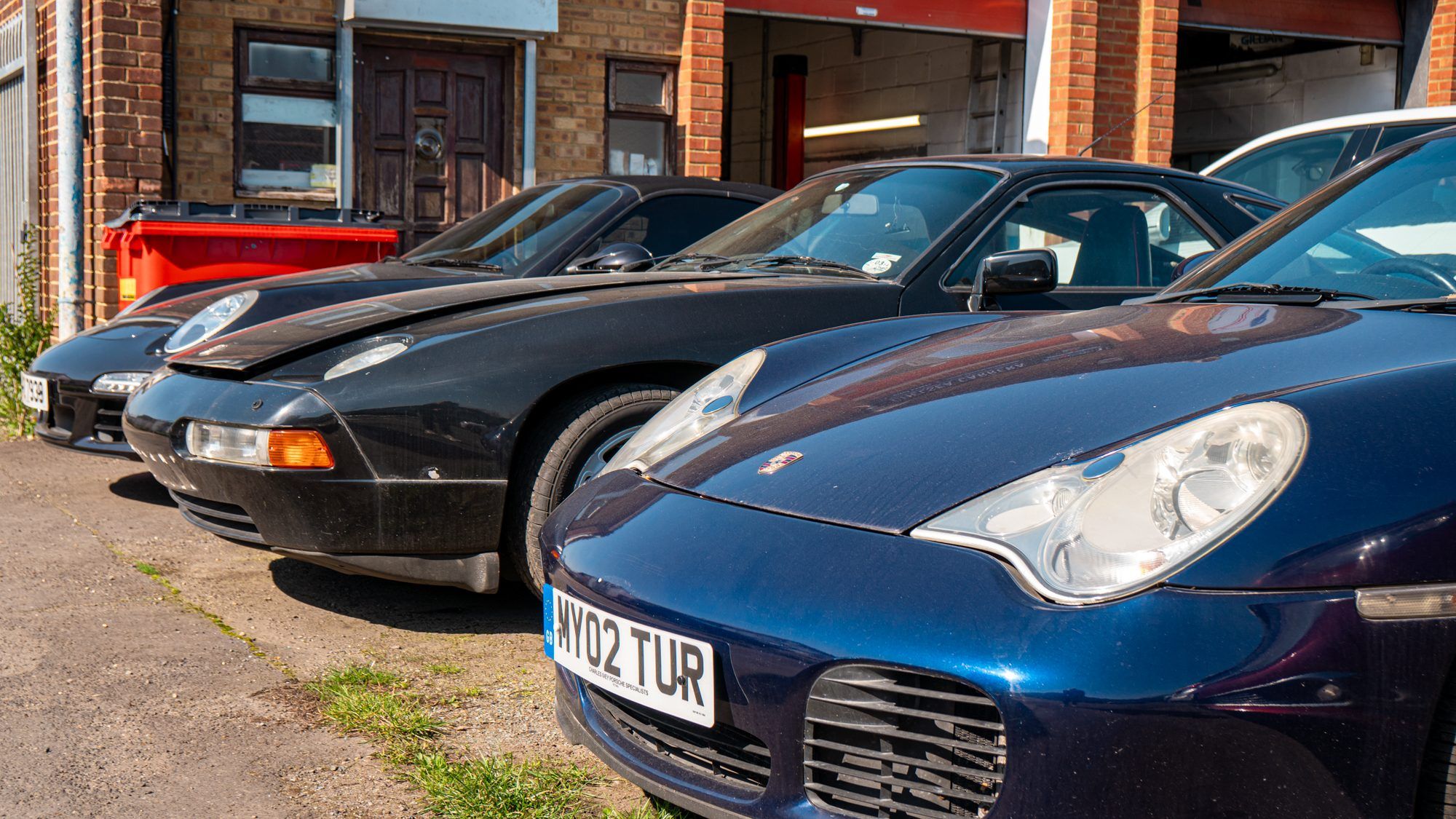
The key to owning a Porsche 924, 928, 944 or 968 is the timing belt: changed on time, tensioned correctly and, on the four-cylinder engines that have one, changed together with the balance shaft belt. After that, Porsche 924, 928, 944 and 968 maintenance is mostly about age, because even the youngest of these cars is now more than 30 years old.
In short: Porsche’s front-engined transaxle cars are the four-cylinder 924, 944 and 968 and the V8 928, built between 1976 and 1995. The most important maintenance item is the timing belt, renewed at Porsche’s interval and tensioned correctly, together with the balance shaft belt on 944, 968 and 924S engines. The cooling system, clutch, electrics and ageing rubber come next, and all of these cars should run on E5 petrol.
Which Porsches are the transaxle cars?
The transaxle Porsches are the 924, 944, 968 and 928: front-engined, water-cooled cars with the gearbox at the back, combined with the final drive in a single unit called a transaxle. A rigid torque tube joins the engine to the transaxle, with a driveshaft running inside it, giving these cars their near-even weight distribution.
| Model | Built | Engines |
|---|---|---|
| 924 | 1976 to 1988 | 2.0-litre four-cylinder, also turbocharged in the 924 Turbo; the 944’s 2.5-litre engine in the 924S from 1986 |
| 944 | 1982 to 1991 | 2.5-litre eight-valve four-cylinder (2.7 litres in 1989); 2.5-litre 16-valve in the 944 S; 3.0-litre 16-valve in the S2; 2.5-litre turbo in the 944 Turbo |
| 968 | 1991 to 1995 | 3.0-litre 16-valve four-cylinder with VarioCam |
| 928 | 1977 to 1995 | V8 of 4.5, 4.7, 5.0 or 5.4 litres, with 16 valves on early cars and 32 valves later |
Why is the timing belt so important on these cars?
Because on most of these engines, a timing belt that breaks or jumps a tooth lets the valves hit the pistons. The 944, 968 and 924S engines and the 32-valve 928 V8 are interference engines: the valves and pistons use the same space at different moments, and the belt keeps them apart. Opinions differ on some of the earlier engines, but the sensible assumption on any of these cars is that a belt failure means taking the engine apart.
When should the belts be changed?
At the interval Porsche specifies, and sooner if the history is unknown. Belts age with time as well as mileage, so a low-mileage car still needs them done on time, and one that has stood for years should have them done before it returns to regular use.
How should the belts be fitted?
With the tension set exactly as Porsche specifies, using the right tools. A belt that’s too slack can jump a tooth; one that’s too tight overloads the bearings it runs on, including the water pump’s. On some engines a new belt’s tension is rechecked once it has run in.
On the 944, 968, 924S and 928 the timing belt also drives the water pump, so it makes sense to renew the pump, tensioners and rollers with the belt. Oil or coolant shortens a belt’s life, so fix any leak near the belt drive at the same time.
What does the balance shaft belt do?
The 944, 968 and 924S engines have two balance shafts, driven by their own smaller belt, to cancel the vibration a large four-cylinder engine naturally produces. If the balance shaft belt fails it can foul the timing belt, so a specialist will normally renew and tension the two together. The original 2.0-litre 924 and the 928’s V8 have no balance shafts.
Do the 16-valve and 32-valve engines have chains too?
Yes. On the 944 S, 944 S2, 968 and 32-valve 928, a short internal chain drives the intake camshafts from the belt-driven exhaust camshafts. The chain, tensioner and guides wear too (on the 968 they’re part of the VarioCam system), so check them when the belts are done.
What else needs regular attention?
Mostly age-related items: the cooling system, the clutch and driveline, the electrics and anything made of rubber.
Cooling system
Hoses, the radiator, the expansion tank and its cap are all old enough now to check at every service. On the 944, oil in the coolant can come from the oil cooler seals as well as from a head gasket, so it needs proper diagnosis rather than an assumption. Overheating and leaks are part of our Porsche maintenance and repair work.
Clutch, torque tube and transaxle
On all four cars the clutch sits at the engine end and the gearbox at the back, so a clutch change involves far more dismantling than on a conventional front-engined car. The 968 has a dual-mass flywheel, which should be checked whenever the clutch is out.
The driveshaft inside the torque tube runs in bearings that can wear and become noisy, the transaxle’s rubber mounts age like any others, and gearbox oil should be changed at Porsche’s intervals. On automatic 928s, a specialist will also check the flexplate at the front of the driveshaft, because pressure on it can wear the crankshaft thrust bearing over time.
Electrics
Three decades and more of heat, damp and vibration take a toll on connectors, earth points, relays and fuse boards, and a tired relay or corroded earth can cause intermittent faults that look far worse than they are. Check that the pop-up headlights, windows, central locking and air conditioning all work.
Rubber parts and fuel
Fuel hoses, brake hoses, bushes, mounts and seals all harden and crack with age, and a perished fuel hose in a hot engine bay is a fire risk. None of these cars is cleared for E10 by the UK government’s checker, so we recommend E5 super unleaded, as our article Will E10 fuel affect my Porsche? explains. Like any classic, they also need servicing on time as well as on mileage; our article on how often to service a classic Porsche explains why.
Does parts quality matter?
Yes. Belts, tensioners and water pumps range from Porsche Genuine and OE parts made by the same suppliers to aftermarket brands at very different prices. We’ll talk you through the options, but Lawrence only fits parts he knows and trusts: on an interference engine, a cheap part that fails can cost far more than it saved. Porsche service costs explained sets out how our quotes work.
What should I look for when buying a 924, 928, 944 or 968?
Start with the paperwork, then have the car inspected by someone who knows these models. The belt history comes first: when the timing belt and any balance shaft belt were last changed, at what mileage, and what was replaced with them. If there’s no record, plan to have them done straight away. Then look for:
- Overheating, coolant leaks or oil in the coolant
- Oil leaks from the engine and transaxle
- A clutch that slips or bites oddly, and driveline noise on the move
- Electrics, headlights and instruments that don’t work as they should
- Corrosion and previous accident repairs underneath
- Evidence that the car is the model and specification it claims to be
A car that has been stored for years can look immaculate and still need belts, fluids, hoses and tyres before regular use.
Lawrence has been working with Porsches for more than 40 years, which goes back to when the 924, 928 and 944 were still on sale. Our Porsche pre-purchase inspection covers every aspect of the car, and the car comes to our workshop in High Wycombe for it.
Common questions
Is the Porsche 944 an interference engine?
Yes. If the timing belt on a Porsche 944 breaks or jumps a tooth, the valves can hit the pistons, and the engine has to come apart to repair it. The same applies to the 968, the 924S and the 32-valve 928 V8, so belt changes on time and at the correct tension matter on all of them.
Can I use E10 petrol in a Porsche 944 or 928?
No. The UK government’s E10 checker only clears Porsche petrol models from the 1998 model year, and the last 928s and 968s were built in 1995. We recommend E5 super unleaded for the 924, 928, 944 and 968.
How often should the timing belt be changed on a 944, 968 or 928?
At the interval Porsche specifies for the engine, and sooner if the history is unknown or the car has stood for a long time. Belts age as well as wear, so if there’s no dated record of the last change, treat the belt as due.
Looking after a transaxle Porsche
If you own a 924, 928, 944 or 968, or you’re thinking of buying one, we’d be glad to help. We look after these cars at our workshop in High Wycombe, and collection and delivery is available for London clients. Find out more on our Porsche 928, 944 and 968 specialist page, call 01494 534834 or contact us.
More on this model: Porsche 928, 944 & 968.