
Will E10 Fuel Affect My Porsche?

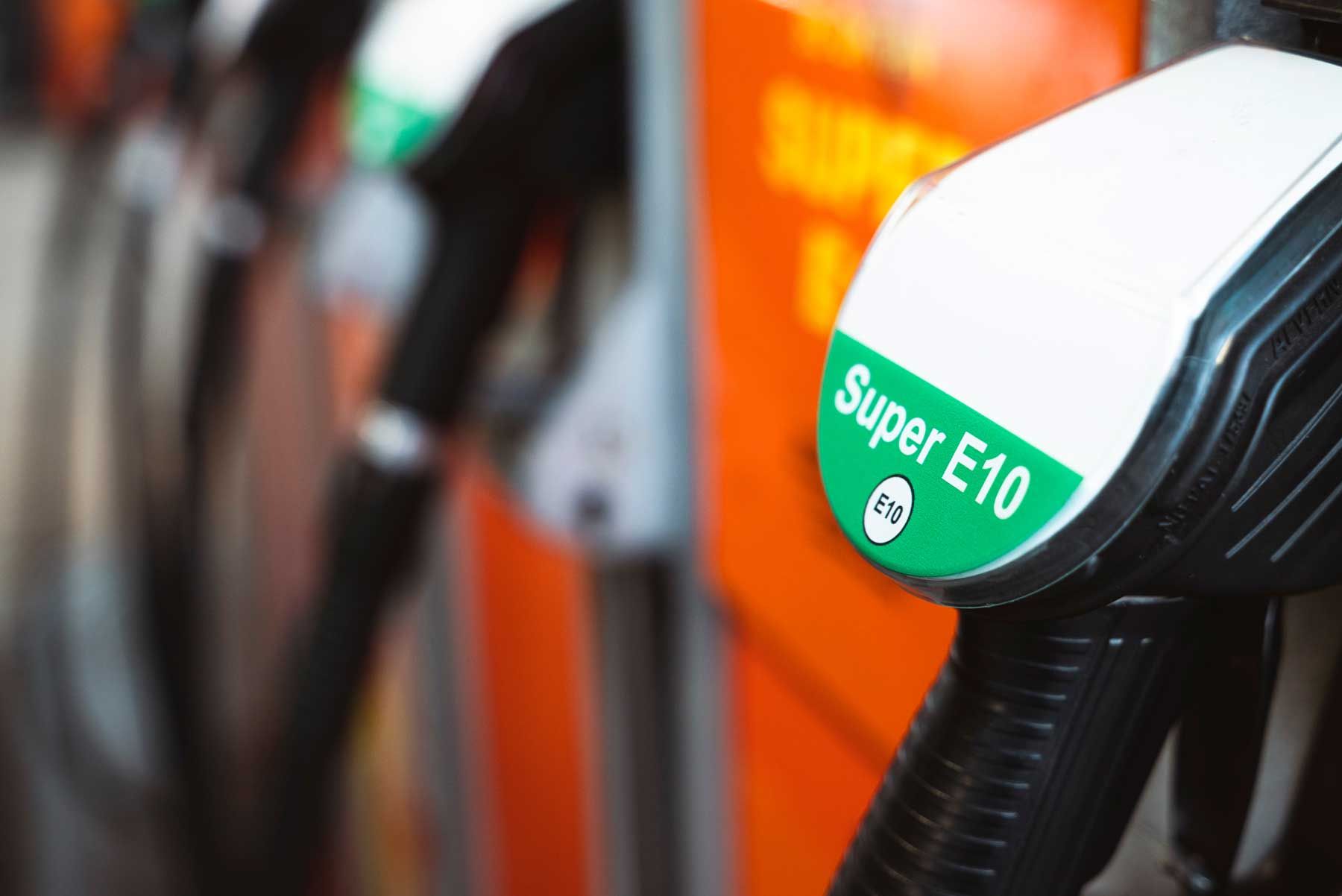
E10 fuel won’t affect most Porsches built from the late 1990s onwards. The UK government’s E10 checker says every Porsche with a petrol engine from the 1998 model year is cleared to use it, along with every Boxster from the 1997 model year, with the Carrera GT the one exception. Older Porsches, including almost every air-cooled 911, should stay on E5 super unleaded.
In short: E10 petrol, the standard 95 octane grade in Great Britain since September 2021, is cleared for Porsches with petrol engines from the 1998 model year and for every Boxster from 1997, but not for the Carrera GT. Classic and air-cooled Porsches should use E5 super unleaded (97+ octane), because the extra ethanol in E10 can harm older fuel system parts.
What is E10 petrol?
E10 is petrol blended with up to 10% renewable ethanol. It replaced E5, which contains no more than 5% ethanol, as the standard 95 octane grade in Great Britain in September 2021 and in Northern Ireland in November 2022.
E5 hasn’t disappeared. It’s still sold as the “super” grade (97+ octane) at filling stations that offer two grades of petrol, although some small or rural stations sell only one. Pumps and nozzles carry a circular E5 or E10 label, so check before you fill up.
Which Porsches can use E10 fuel?
According to the UK government’s E10 vehicle checker, E10 is cleared for every Porsche with a petrol engine from the 1998 model year onwards and for all Boxsters with petrol engines from the 1997 model year. The Carrera GT is not cleared. In practice, that means:
| Porsche | Cleared for E10? | Our advice |
|---|---|---|
| 911: 996, 997 and 991 | Yes | E10 or E5 |
| Boxster (986, 987, 981, 718) and Cayman (987, 981, 718) | Yes | E10 or E5 |
| Cayenne, Panamera and Macan with petrol engines | Yes | E10 or E5 |
| Carrera GT | No | E5 |
| Air-cooled 911s and the 912 | Not before the 1998 model year | E5 for every air-cooled car |
| 356, and the front-engined 924, 944, 968 and 928 | No | E5 |
The checker’s cut-off is a model year, not a model, so strictly the last 993s, built for a shortened 1998 model year, fall on the cleared side of the line. Every air-cooled car is now decades old, and so are its fuel system parts unless they’ve been replaced, so we’d keep all of them on E5.
The checker is based on information supplied by the manufacturers’ associations, and it notes that replacement parts can affect its accuracy. A car’s model year can also differ from its registration date. If you’re unsure, the government’s advice is simple: use E5. A specialist can confirm your car’s model year from its vehicle identification number.
Why should classic and air-cooled Porsches stick to E5?
Because their fuel systems were designed long before ethanol blends were common. The hoses, seals, diaphragms and some of the metals and plastics used in classic Porsche fuel systems can deteriorate with higher ethanol content, and on an air-cooled 911 the fuel system sits close to a very hot engine.
What does ethanol do to older fuel system parts?
Ethanol behaves differently from petrol in ways that matter to older cars:
- It acts as a solvent. It can make some older rubber compounds swell, soften or crack, and it can loosen old varnish and deposits in tanks and lines, which then block filters, injectors or carburettor jets.
- It attracts water. Ethanol absorbs moisture from the air, which can encourage corrosion inside tanks, fuel lines and other fuel system components, especially in a car that stands for long periods.
- It can attack some metals. Some of the metals used in older fuel systems are more prone to corrosion in ethanol-blended fuel.
On a classic, the result can be a fuel leak, a blocked filter or a car that runs poorly. A fuel leak in a hot engine compartment is a fire risk, which is why the fuel hoses on any older Porsche deserve a careful look at every service.
Does E5 protect an old fuel system completely?
No. E5 can still contain up to 5% ethanol, so rubber fuel hoses on a classic still age and need replacing in time. When they are replaced, modern ethanol-resistant hose is the sensible choice, and it’s one of the upgrades that keeps an older Porsche’s fuel system reliable.
As part of our Porsche servicing at our High Wycombe workshop, we also treat fuel and brake lines alongside our other preventative checks. Our article on how often to service a classic Porsche explains what else a classic service covers.
What if I put E10 in my classic Porsche by mistake?
Fill up with E5 next time. The government’s guidance is that a single tank of E10 in a car that isn’t cleared for it shouldn’t be a major problem and there’s no need to drain the tank, but prolonged use isn’t recommended.
If the car is about to go into storage, use up the E10 or dilute it with E5 rather than leaving it to stand. And if you notice a fuel smell, a leak or the car running differently afterwards, have it checked before you drive further. Fuel leaks are part of our Porsche maintenance and repair work.
How should I store a Porsche to protect its fuel system?
Fill up with fresh E5 before storage, keep the car dry and use it properly when you can. A tank filled before a lay-up leaves less space for moist air, and E5 is the better fuel to leave standing in an older car.
- Modern Porsches are cleared for E10, but filling up with E5 before a long lay-up does no harm. The government says the two grades can be mixed in a car that’s cleared for E10.
- A fuel stabiliser can help if a car will stand for several months.
- When the car comes out of storage, check for any fuel smell or dampness around hoses and unions before the first drive.
- Drive it far enough to get everything properly warm, rather than starting it to idle for a few minutes.
Air-cooled engines have their own reasons to dislike short runs, which our article on how a Porsche air-cooled engine works explains.
Will E10 affect my Porsche’s performance or economy?
For cars that are cleared to use it, the government says E10 may reduce fuel economy slightly, but the difference is unlikely to be noticeable in everyday driving. Your handbook gives the recommended octane rating for your Porsche. Many owners choose the super grade for its higher octane, and in the UK the super grade is E5.
Common questions
Can I use E10 in my Porsche 996 or Boxster?
Yes. The UK government’s E10 checker clears Porsche petrol models from the 1998 model year, which includes every 996, and all petrol Boxsters from the 1997 model year. E5 is also fine if you prefer it.
Should I use E10 in my air-cooled 911?
No. We recommend E5 super unleaded (97+ octane) for every air-cooled 911, 912 and 356. Their fuel systems were designed long before ethanol blends were common, and the parts are now decades old unless they’ve been replaced.
Is it safe to mix E10 and E5 in a Porsche?
In a Porsche that’s cleared for E10, yes: the government says the two grades can be mixed in the same tank. In a classic that isn’t cleared, an accidental part-tank of E10 isn’t a disaster, but switch back to E5 at the next fill.
Does E5 super unleaded contain ethanol?
Yes, up to 5%. That’s half the maximum in E10, but it’s one reason rubber fuel hoses on a classic Porsche still need inspecting and replacing as they age.
Looking after a classic fuel system
If your air-cooled or classic Porsche still has old fuel hoses, or you’re not sure what’s been replaced, it’s worth having the fuel system inspected. We look after air-cooled 911s at our workshop in High Wycombe, with collection and delivery available for London clients. Find out more about our air-cooled Porsche servicing and maintenance, call 01494 534834 or contact us.
More on these models: Porsche 911 and Porsche 928, 944 & 968.