
Porsche Cayenne Common Problems: 955, 957, 958 and 9Y0

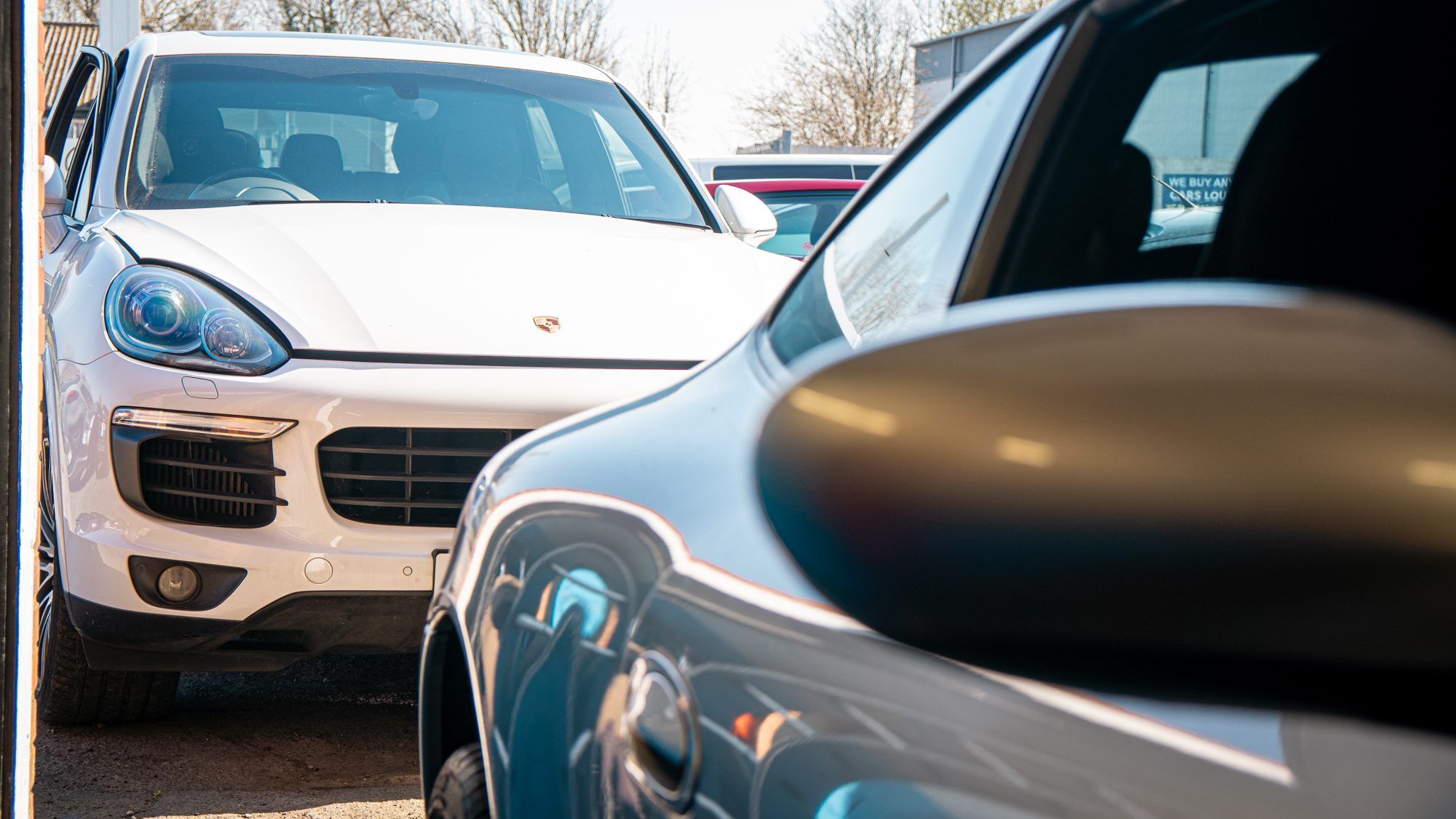
The most common Porsche Cayenne problems depend on the generation: cracked plastic coolant pipes on early first-generation V8s, propshaft centre bearing failure on the 955 and 957, and transfer case trouble on the 958. Every Cayenne is also heavy and powerful, so brakes, tyres, suspension joints and air suspension (where fitted) need regular attention.
In short: Porsche Cayenne common problems vary by generation. On the first-generation 955 and 957 (2002 to 2010), look for cracked coolant pipes on early V8s and a failing propshaft centre bearing. On the 958 (2010 to 2017), the transfer case is a well-known weak point. Every Cayenne works its brakes, tyres and suspension hard, and air suspension wears with age.
Which Porsche Cayenne generations are there?
This guide covers three generations. The first, built from 2002 to 2010, is split into the original 955 and the facelifted 957 of 2007. The second is the 958, sometimes called the 92A. The third is the 9Y0, revealed in 2017, with a Coupé added in 2019.
| Generation | Built | Main engines |
|---|---|---|
| 955 | 2002 to 2007 | 3.2 V6; 4.5 V8 (S); 4.5 twin-turbo V8 (Turbo, Turbo S) |
| 957 | 2007 to 2010 | 3.6 V6; 4.8 V8 (S, GTS); 4.8 twin-turbo V8 (Turbo, Turbo S); 3.0 V6 diesel from 2009 |
| 958 | 2010 to 2017 | 3.6 V6; 4.8 V8, later a 3.6 twin-turbo V6 (S, GTS); 4.8 twin-turbo V8 (Turbo, Turbo S); 3.0 V6 and 4.2 V8 diesels |
| 9Y0 | From 2017 | 3.0 turbo V6; 2.9 twin-turbo V6 (S); 4.0 twin-turbo V8 (Turbo, GTS) |
What are the most common Porsche Cayenne problems?
The most common Porsche Cayenne problems are coolant pipe leaks on early V8s, propshaft bearing failure on first-generation cars, transfer case wear on the 958, air suspension faults, and wear to brakes, tyres and suspension joints.
| Problem | Mainly affects | Typical signs |
|---|---|---|
| Cracked coolant pipes | Early V8s (955) | Coolant loss, a sweet smell, rising temperature |
| Propshaft centre bearing failure | 955 and 957 | Vibration, often when pulling away |
| Transfer case wear | 958 | Judder, drivetrain noises, a four-wheel-drive warning |
| Air suspension faults | Cars with air suspension | Sitting low after standing, warning messages |
| Brake, tyre and suspension wear | Every Cayenne | Vibration under braking, knocks, uneven tyre wear |
What goes wrong on a first-generation Cayenne (955 and 957)?
The first-generation Cayenne’s best-known faults are cracking coolant pipes on early V8s and a worn propshaft centre bearing. Both are well understood, and the invoices will show if they’ve been dealt with.
Coolant pipes on early V8s
Early V8 Cayennes were built with plastic coolant pipes running under the intake manifold. With age and heat they can crack, and a sudden failure can cause overheating. Porsche later switched to aluminium pipes, and fitting them is the usual fix. The manifold has to come off to reach them, so proof the job has been done is worth having.
Propshaft centre bearing
The propshaft to the rear axle has a centre support bearing in a rubber mounting, and it’s a known failure point on first-generation Cayennes. As it wears, the shaft can vibrate, often most noticeably when pulling away. A new vibration through the floor is worth checking on a lift.
What are the common problems on the 958 Cayenne?
The 958’s best-known weakness is the transfer case, which divides drive between the front and rear axles. It’s widely reported on the 958, and the signs include judder, clunks or other drivetrain noises and a four-wheel-drive warning. A careful road test and a diagnostic read-out of the drivetrain control units are the best way to judge one. Otherwise, the 958 shares the general wear points below.
What about the third-generation Cayenne (9Y0)?
The 9Y0 is a modern car, and some still have warranty cover. The priorities are servicing to Porsche’s schedule, recalls and software updates, and the same wear items as any heavy SUV. It introduced different tyre widths front and rear, and some cars have Porsche Surface Coated Brakes (PSCB) or ceramic brakes (PCCB). Recalls and warranty repairs belong with a Porsche Centre; our comparison of independent specialists and main dealers explains which jobs go where.
Does the Porsche Cayenne have a PDK gearbox?
No. Automatic Cayennes use Tiptronic S, a conventional automatic with a torque converter: six-speed on the first generation and eight-speed on the 958 and 9Y0. A six-speed manual was offered on some versions of the first two generations. PDK, Porsche’s dual-clutch gearbox, is used in most Panameras, petrol and diesel Macans and later 911s, Boxsters and Caymans; our guide to PDK gearbox maintenance explains the difference.
Check what Porsche’s schedule says about the Tiptronic fluid and whether it has been changed, and on a high-mileage or towing car, have the fluid and shift quality assessed. The level is usually set at a specified temperature read through the diagnostic system, so it’s a workshop job. Harsh or delayed changes, flaring revs and low-speed judder are the warning signs, though a weak battery or a software fault can cause similar symptoms.
What should every Cayenne owner keep an eye on?
Whatever the generation, a Cayenne’s weight and performance show up in its brakes, tyres and suspension. These are wear and age items rather than design faults, covered on our Porsche maintenance and repairs page.
Air suspension
Air suspension was standard on some Cayennes, including the first-generation Turbo, and optional on others. With age the air springs perish and leak, which makes the compressor work harder until it wears out too. A car that sits low after standing, leans to one corner or shows a suspension warning should be checked before the compressor suffers.
Brakes, tyres and suspension joints
Stopping a heavy car works the brakes hard, so check the discs as well as the pads for a worn lip, corrosion and vibration under braking. Porsche approves specific tyres for its cars, marked N0, N1 and so on, and a four-wheel-drive car should have matching tyres of the correct size on all four corners. Control arm bushes, ball joints and anti-roll bar links also wear; knocks over bumps, wandering steering and uneven tyre wear are the usual signs.
Cooling, electrics and diesels
Radiators at the front can collect debris, and water pumps, thermostats and hoses age as on any older car. A tired battery can set off warnings in several systems at once, so a PIWIS diagnostic check is the place to start with any warning light. Diesel Cayennes, like most modern diesels, have a particulate filter (DPF) that needs regular longer runs to clean itself.
What should you check before buying a used Cayenne?
Before buying, check the history, the known weak points for that generation and the running gear, then have the car inspected by a specialist.
- History: servicing to Porsche’s schedule, with itemised invoices.
- Known weak points: aluminium coolant pipes on an early V8, the propshaft bearing on a 955 or 957, the transfer case on a 958.
- Engine: on a first-generation V8, an endoscope inspection of the cylinders rules out the bore scoring reported on some of these engines.
- Suspension and gearbox: no dropping after standing, every height setting working, smooth changes from cold and when warm.
- Fault memory: a PIWIS read-out of all the control units shows stored faults that the dashboard may not.
- Public records: the MOT history and vehicle recall checks on GOV.UK.
A Porsche pre-purchase inspection covers every aspect of the car, and the car comes to our workshop in High Wycombe for it.
Common questions
Is the Porsche Cayenne expensive to maintain?
A Porsche Cayenne costs more to maintain than an ordinary SUV, mainly because its weight and complexity show up in brakes, tyres and suspension. Every job depends on the car and the parts chosen, so we quote each car individually rather than publishing fixed prices. Our guide to Porsche service costs explains what drives the bill.
Do all Porsche Cayennes have air suspension?
No. Air suspension was standard on some Cayennes, including the first-generation Turbo, and an option on others, while many cars have steel springs. A specialist can confirm which your car has.
Can an independent specialist service a Cayenne that’s under warranty?
Yes, for routine servicing. Under the Motor Vehicle Block Exemption Order 2023, a manufacturer’s warranty shouldn’t depend on servicing within its own network, provided the work follows Porsche’s schedule with suitable parts. Warranty repairs and recalls go to a Porsche Centre, and Approved or extended warranties have their own terms.
How we can help
We look after Cayennes of every generation, from the first 955s onwards, to Porsche’s service schedules, with genuine Porsche parts as standard and PIWIS 4 diagnostics. If your Cayenne has a warning light, a new vibration or sagging suspension, or you’re thinking of buying one, bring it to our workshop in High Wycombe; collection and delivery is available for London clients. See our Porsche Cayenne specialist page, call 01494 534834 or find our contact details.
More on this model: Porsche Cayenne.